
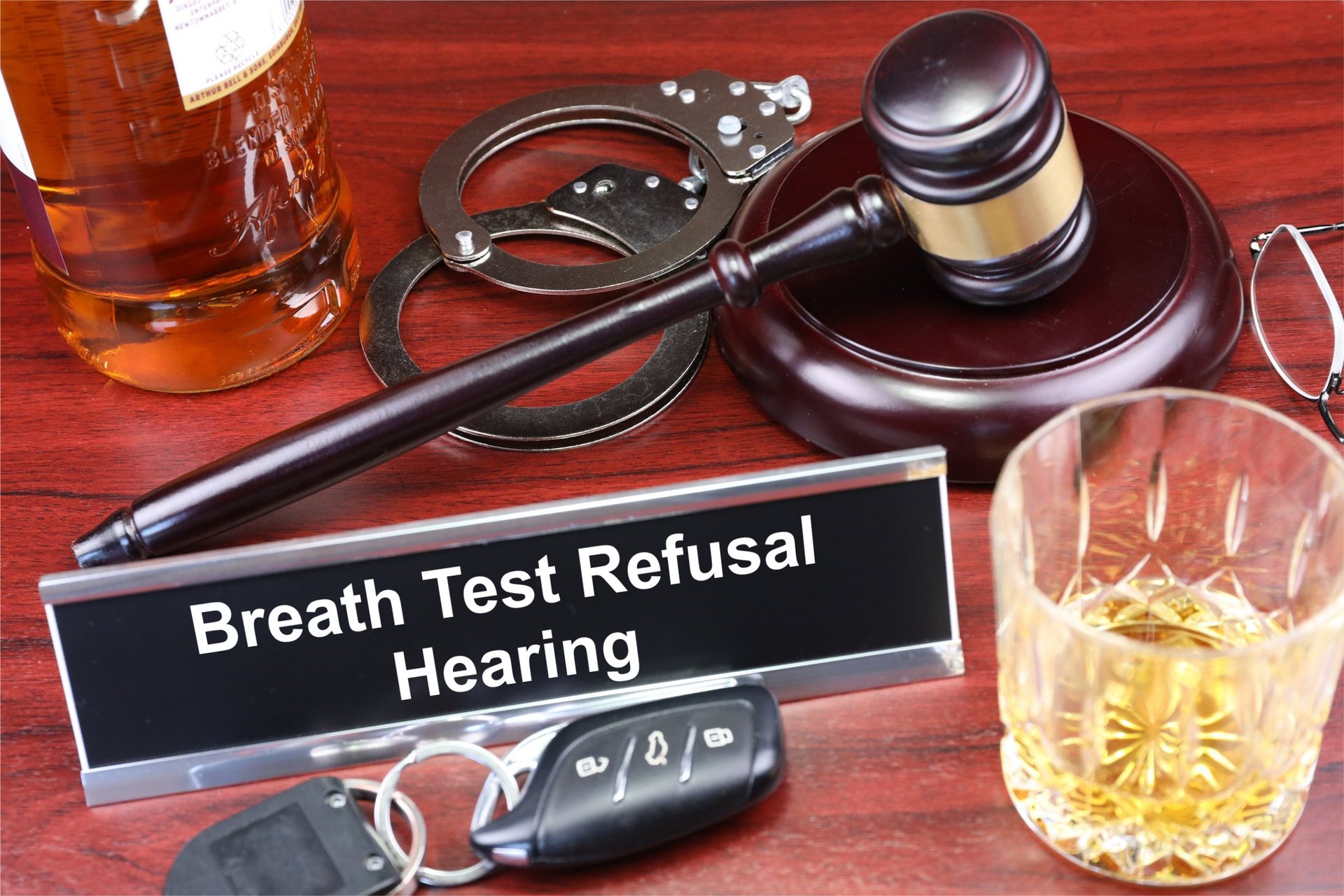
You are driving home. The blue lights flash in your rearview mirror. You pull over. The officer walks up with a flashlight and a plastic tube. He asks you to blow into it. Your brain screams no. That split second of hesitation changes everything.
Most people think refusing the test buys them time or protection. It does not work that way. The law already decided what happens next before you ever got behind the wheel. Every state has a rule that says driving automatically means you agree to chemical testing if an officer suspects intoxication. We call it implied consent. It is not a suggestion. It is a condition of your license.
Think of it like buying a gym membership. You sign a paper at the front desk. You do not have to show up every day. You can walk away whenever you want. But you already agreed to the rules while you were inside the building. Driving is that agreement. The plastic tube is just the enforcement mechanism.
When you refuse, the officer does not need to prove you are drunk right then. He does not need to watch you stagger or listen to slurred words. He just needs to see your refusal and pull out a clipboard. The consequences arrive quickly. Usually within days. Your license gets suspended. That happens automatically in most states. You do not get a hearing first. You do not get to argue your case in front of a judge before the suspension starts. The administrative process runs parallel to any criminal case. It operates on its own track.
Some folks think they can fight the suspension later and win. That is possible but highly unlikely. You will spend months filling out forms, paying filing fees, and sitting in cold rooms while lawyers trade words. The clock keeps ticking either way. Time moves forward for everyone. Alcohol leaves your body at a steady pace. Roughly one standard drink per hour. Refusing the test does not slow that process down. It just removes the evidence you would normally use to fight the charge.
Here is where the math gets interesting. If you blow a number above the legal limit, you face drunk driving charges. The test gave them proof. If you blow a number below that limit, you still face charges because the officer had probable cause to pull you over. Maybe you crossed a line. Maybe your brake lights failed. Maybe your driving looked erratic. The breath test is just one piece of the puzzle. Refusing it does not erase the rest. It leaves a hole in your defense.
Prosecutors know this. They do not panic when you refuse. They adapt. They bring in a blood draw instead. A judge signs a warrant. You sit in a cold room with a needle while they wait for lab results. Blood tests are harder to challenge than breath tests because the chain of custody is tighter and the chemistry is more exact. You traded a quick tube for a drawn out medical procedure.
Some states treat refusal as a standalone crime. That means you walk away from the traffic stop with two problems instead of one. You face the drunk driving charge plus a separate refusal charge. Both carry fines, court costs, and mandatory classes. Both sit on your record. Both show up when you apply for insurance or new jobs.
You might wonder why the law works this way. The answer sits in basic physics and public safety. Alcohol makes you slower to react. It dulls your judgment. It takes time to metabolize. Police officers need a reliable snapshot of your system while the evidence is fresh. Waiting for blood draws takes hours. Breath tests give immediate data. The implied consent rule forces cooperation so officers can make quick decisions about road safety.
I hear people say they will not cooperate because they trust the equipment less. That makes sense on paper. Breathalyzers can fail if not calibrated right. Technicians can make mistakes. Officers can misread the display. Those flaws exist. They show up in court all the time. But courts handle those challenges through cross examination and expert witnesses. They do not reward refusal with immunity.
Let us look at what actually happens after you say no. The officer writes a report. He notes your refusal in bold letters. He sends it to the department of motor vehicles. Your license gets suspended automatically. You get a temporary pass that lasts maybe thirty days. After that, you drive on a restricted permit or you walk everywhere. You will pay for a reinstatement fee later. That fee does not care about your legal arguments. It just wants its money.
The criminal case moves forward separately. You hire a lawyer. You review dash camera footage. You interview the officer. You dig into your own timeline. Maybe you only had one drink three hours ago. Maybe you ate a heavy meal right before the stop. Maybe you feel fine but smell like beer from the dinner party. Your lawyer fights to get the charges reduced or dropped. Refusal does not help that fight. It just forces your lawyer to work harder without a key piece of evidence.
There is a simple way to think about this choice. You are standing at a fork in the road. One path gives you a clear starting point for your defense. The other path hands your opponent a blank check and asks them to write whatever story they want. Courts fill that blank space with assumptions. They assume you knew you were impaired. They assume you feared losing your license more than you feared driving drunk. They assume refusal equals guilt.
You can challenge those assumptions later. You can hire experts. You can demand transparency from the state. All of that takes money and time. It also takes patience you might not have while your car sits in an impound lot and your insurance premiums jump to astronomical levels.
The practical reality is straightforward. Implied consent laws exist to remove guesswork from traffic stops. They treat driving as a privilege backed by clear rules. Refusing the test triggers automatic penalties before any court ever sees your case. It forces alternative testing methods that are more invasive and more reliable. It leaves your legal team without a standard benchmark to work against.
If you ever face that plastic tube, take a breath. Listen to the officer carefully. Ask yourself what you actually want to prove. The law already gave you the answer before you started driving. Cooperation usually keeps the process moving toward a normal court date. Refusal pulls the emergency brake and sends your life into administrative limbo while the criminal case plays out anyway.
Your license is not just plastic in your wallet. It is your daily freedom. It pays your rent. It gets you to work. It connects you to your family. Protect it by understanding the rules that govern it before you need them. Read your state statutes. Talk to a lawyer who handles traffic cases regularly. Do not wait for blue lights to teach you how the system works.
The road does not care about your excuses. The law does not care about your hesitation. It only cares about what you did when the question was asked. Choose wisely. Know the consequences before you reach for the tube. Make your decision with your eyes open and your options mapped out. That is how you navigate these stops without losing control of your life.
The authors of this web site are not professional advisors. The content on this blog is not intended to be a substitute for professional advice. Always seek the advice of a qualified professional with any questions you may have regarding this topic. Never disregard professional advice or delay in seeking it because of something you have read on this site.
Images on this page may be used for free under a creative commons license but attribution as shown below each image is required to obtain and maintain a license to use any of the images on this page.